Visual Pleasure in Wings of Desire
An examination of both the artfulness and flaws of Wim Wenders' perspective on spectatorship and gaze.
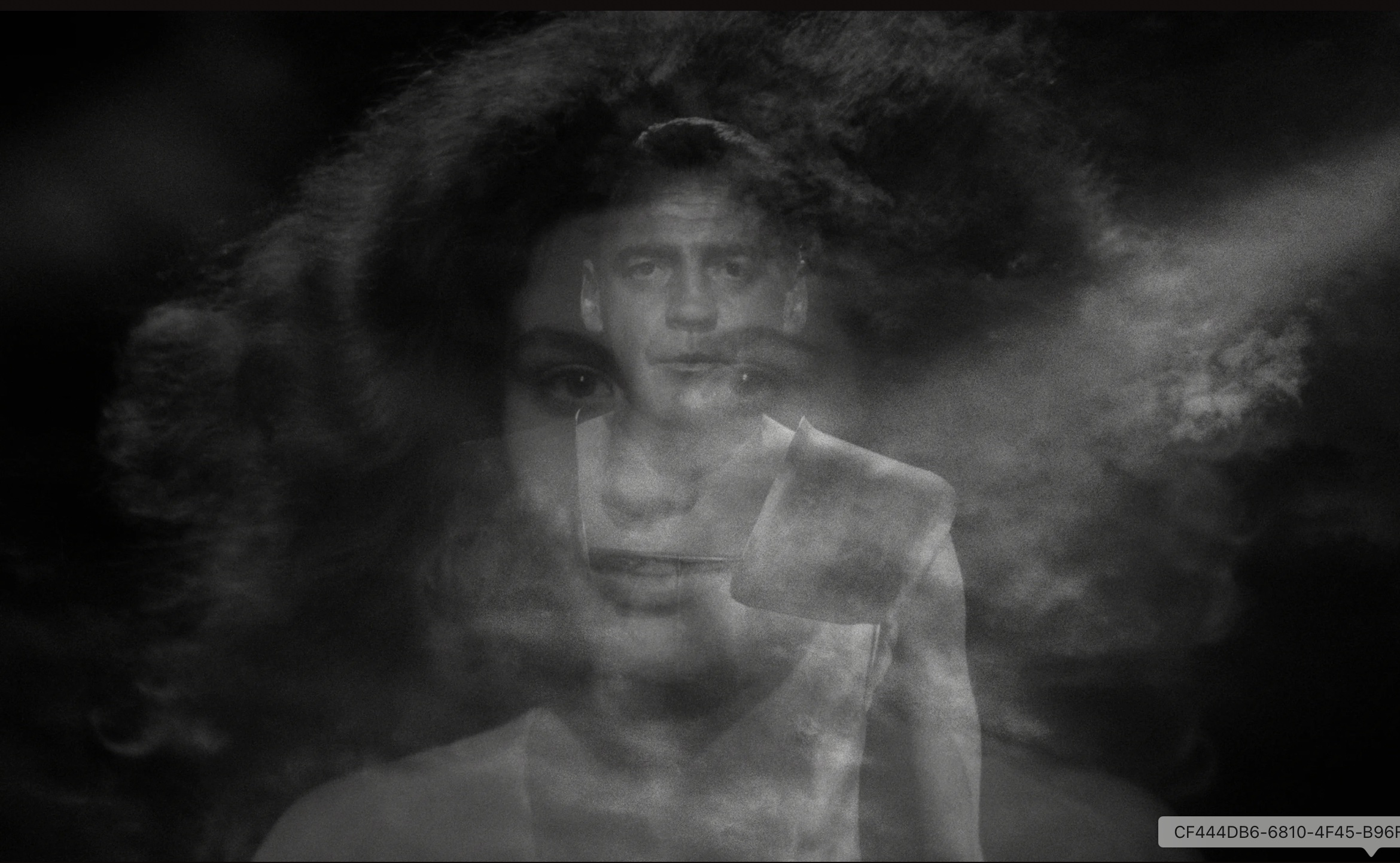
Two angels, Damiel and Cassiel, invisibly drift through the streets of Berlin, observing human life. They listen to people’s thoughts, witness their struggles, and offer quiet comfort, but remain detached from society. Damiel has become dissatisfied with this purely observational existence; he longs to touch, taste, and participate in human life. His desire intensifies when he falls in love with circus performer Marion and hopes to give up his immortality in order to experience human connection.
Released in 1987 and directed by Wim Wenders, Wings of Desire emerges from a historically and culturally complex moment in Berlin’s past. Released during the late Cold War period, the city was deeply marked by a sense of division and alienation, both physically by the Berlin Wall and psychologically by the lingering trauma of World War II. This film was Wenders’ reunion with his favorite city after an extended period making films in the United States, and he sought to tell a story that could capture Berlin’s identity. He found inspiration from the statues of angels throughout Berlin and their seemingly observant presences. The result is a film that meditates on national identity, cultural memory, and the human experience.
This narrative unfolds against the backdrop of a divided Germany, where the absence of East Berlin becomes as significant as its presence. Although the film is primarily shot in West Berlin, the East lingers as a “structuring absence.” The city’s division exists on the earth, but through this story of impartial angels, Wenders suggests that it does not extend to the spiritual or emotional realm. Scholar Christian Rogowski, in his novel about this film, provides the context that this perspective “seemed to be a naive and anachronistic stance to take…In the West, an insistence on German unity was by and large dismissed as a concern only of marginal reactionary groups and foolhardy nationalistic dreamers” (10). However, Wenders continues to explore this idea of unity and calls for more connection despite this.
Wings of Desire also grapples with the question of German identity in the aftermath of its brutal history. The film is filled with visual reminders of wartime destruction and includes documentary elements that evoke the memory of World War II. Wenders is focused on whether Germany can achieve a productive sense of national identity from such a past, and his experience in America also informs this concept. His perceived artificiality of the American Dream led him to a more fundamental existential concern: how is one to live? This question becomes central to Damiel’s transformation, as well as to the film’s broader philosophical project.
Throughout this film, Wenders repeatedly disrupts typical conventions of the spectator experience in order to emphasize themes of distance versus connection. This disruption can be productively analyzed through the lens of Laura Mulvey’s essay “Visual Pleasure and Narrative Cinema”. Mulvey argues that classical cinema is structured around two main sources of visual pleasure: voyeurism (the pleasure of looking) and identification (the pleasure of aligning oneself with characters on screen). She says this about the typical viewing experience: “the mass of mainstream film…portray a hermetically sealed world which unwinds magically, indifferent to the presence of the audience, producing for them a sense of separation and playing on their voyeuristic phantasy”. These pleasures are embedded within what she terms the “male gaze,” a system in which visual and narrative control is aligned with a masculine perspective, thereby positioning women as passive objects of desire.
Mulvey also identifies three “looks” that structure cinematic experience: the look of the camera, the look of the audience, and the look of characters within the film. Classical cinema typically suppresses awareness of the first two in order to maintain the illusion of a self-contained world, which works to reinforce the male gaze. For Mulvey, this structure is not neutral but ideologically harmful, and she calls for a cinema that disrupts these visual pleasures, challenges identification, and exposes the mechanisms of the gaze.
“True understanding requires participation, embodiment, and emotional engagement.”
Wings of Desire subverts these ideas of visual pleasure. Damiel embodies the voyeuristic position described by Mulvey, since he watches human life without being seen, mirroring the detached perspective of the film spectator. However, unlike the traditional viewer, Damiel is denied the second form of pleasure: identification. He cannot fully participate in the human experiences he observes, which renders his perspective not pleasurable but isolating and incomplete. His desire to become human can thus be understood as a rejection of the detached, voyeuristic gaze in favor of embodied experience.
Wenders further subverts traditional spectatorship by making the act of viewing visible. Characters occasionally look directly into the camera, breaking the illusion of narrative containment and reminding the audience of their role as observers. Wenders described this as the film containing a “loving gaze” meant to be felt by the audience. The film’s use of black and white versus color imagery also plays a significant role in audience activation. The angels’ perspective is shown in monochrome, representing distance and abstraction, while moments of human sensation are depicted in color to depict a more sensory-engaging perspective. Through these techniques, the film denies the audience the typical comfort of passive spectatorship and instead encourages self-reflection.
The question remains, however, whether the film truly escapes the male gaze. This issue is addressed directly by film scholar Christian Rogowski in his article “Der liebevolle Blick”? The Problem of Perception in Wim Wenders’s Wings of Desire. Rogowski asks whether a “loving gaze” is even possible within the framework of cinematic spectatorship, posing the central question: “To what extent does Wenders succeed in visually representing a desire devoid of objectification and domination of the beloved?”
Rogowski does not arrive at one single conclusion, but his analysis highlights the tensions within the film. In examining Damiel’s early encounters with Marion, he argues that the angel’s gaze briefly transforms from detached observation into something more compassionate and human. As he writes, “It is highly significant that Damiel's first encounter with Marion is associated with compassion, with concern for the well-being of another. The angelic gaze of indifferent benevolence has, for a short moment, turned into a humanly loving gaze. This interpretation is compelling, as the scene does emphasize empathy, even if it is intertwined with admiration of her physical presence.
However, Rogowski’s argument becomes less convincing when he claims that Marion maintains autonomy when Damiel follows her into her trailer in the same scene. He suggests that this signals a subjectivity not fully controlled by the male cinematic apparatus because her thoughts are in her native language, French. Yet this moment can just as easily be read as deeply voyeuristic. Damiel’s ability to hear her private thoughts, even in her native language, intensifies the invasion of her privacy. Rogowski insists there is mutual desire because she is talking about wanting to be loved in the scene, but it does not fully escape the dynamics of objectification he seeks to overcome. The gaze, even when framed as loving, remains a form of access and control.
Rogowski ultimately argues that the film is self-aware about these limitations. In the closing scenes, when both Damiel and Cassiel observe Marion, he suggests that the two angels represent the two aspects of visual pleasure: projected desire and wishful identification. This moment reflects not only the characters’ perspectives, but also the viewer’s position. Rogowski argues, “The closing moments of the film indicate that Wenders to a certain extent is aware of the limitations of his efforts as a director and our ability as viewers to achieve and to maintain a loving gaze, a truly liebevoller Blick." Even love, when mediated through film, remains entangled with distance, observation, and projection.
This self-awareness is crucial to understanding the film’s engagement with the male gaze. Despite its limitations, the film ultimately succeeds in transforming the gaze in a meaningful way. Rather than simply reproducing voyeuristic pleasure, it turns that gaze back onto the viewer, prompting reflection on the nature of perception, connection, and experience. As one scholar notes, the film projects the viewer’s desires back onto them, transforming it from a work “about” love into a gesture of love itself. In doing so, it aligns with Mulvey’s call for a cinema that disrupts conventional visual pleasure and exposes its underlying mechanisms.
Wings of Desire does not resolve the problem of the gaze, but it reconfigures it. It reveals the limitations of detached observation and suggests that true understanding requires participation, embodiment, and emotional engagement. By inviting viewers to move beyond passive spectatorship, the film becomes not just something to watch, but something to experience. In the end, it asks us not only to see, but to feel—to connect, and to be present in the world it lovingly depicts.